
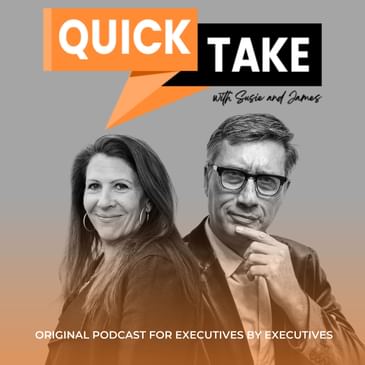
What does it take to stay at the top of your game as a leader—year after year? In this episode, we sit down with Alex Porter, CEO of Location3, a digital ad agency specializing in franchise marketing. With 25 years in the industry, Alex shares how he stays innovative, the leadership lessons he’s learned along the way, and why self-awareness is key to long-term success.
We dive into the importance of balancing optimism with realism, why great leaders surround themselves with different perspectives, and how structured systems like EOS can help companies scale. But as much as leadership is about strategy, it’s also about mindset—something Alex has studied for years. Tune in for a candid conversation about learning from mistakes, trusting your team, and maybe even rethinking how you breathe.
Key Takeaways from This Episode:
- The balance between optimism and realism in leadership.
- Why surrounding yourself with diverse perspectives makes you a stronger leader.
- How structured systems like EOS can help companies grow and stay accountable.
Mentioned in This Episode:
- EOS (Entrepreneurial Operating System): www.eosworldwide.com
- Acumax Personality Testing: www.acumaxindex.com
- Breath by James Nestor: www.mrjamesnestor.com/breath-book
Connect with Alex:
www.linkedin.com/in/alexporter
www.location3.com
CONNECT WITH SUSIE:
https://www.linkedin.com/in/susietomenchok/
CONNECT WITH JAMES:
https://www.linkedin.com/in/capps/
[00:00:03] Welcome to the Quick Take Podcast, the show where you get targeted advice and coaching for executives by executives. I'm Susie Tomenchok. And I'm James Capps. Give us 15 minutes and we'll give you three secrets to address the complex topic of issues that are challenging executives like you today. Hey, welcome to Quick Take. I'm one of your hosts, Susie, along with James. How are you, James? I'm fantastic. How are you today, Susie?
[00:00:29] We have a guest, which makes it a fun day because whenever we have a guest, we never know how this is all going to go down. So tell us who's with us, James. I'm so excited to have Alex Porter with us today. Alex is the CEO of Location 3, a digital ad agency that's focused on the franchise space. Their product, Local Act, is just the cutting-edge functionality that franchise owners use to manage their digital advertising.
[00:00:57] So they do some really cool stuff. Alex has been with that company forever. What, you guys just hit your 25-year anniversary? Is that right? That is correct. That's amazing. So thank you so much for joining us, Alex. Thanks for having us, or me. Thanks for having me on. I thought it would be cool if we did a little bit, talk a little bit about that. I mean, you've been with a firm for 25 years in the ad space, which is forever.
[00:01:21] But more importantly, you've been in a leadership role for a long time. And I would say continue to be successful, continue to have really good support from your staff. Your customers enjoy working with you. But how do you do it? How do you keep it fresh? How do you reinvent yourself? How do you keep on top of things? I think I have the benefit of working in a space that is constantly changing and evolving on a day-to-day basis. So that by itself just keeps it fresh and exciting.
[00:01:50] And then from a leadership perspective, I'm constantly trying to learn about myself and how to be a better leader. So whether that is engaging with outside mentors or taking personality tests and understanding what makes me work and what makes me not work well. Just somewhat recently through my business group, I took an EQ test, which told me that I was really high on optimism and really low on realism.
[00:02:18] So that I needed to surround myself with people that would actually tell me what the real story was and not always assume that things will work out, which is the way I've lived my life. But very big on corporate culture, making sure that the team understands the vision and constantly working on that, refining that.
[00:02:37] We use the EOS model to run our business, which helps a lot from kind of a leadership standpoint and also making yourself accountable for what's going on. But I think more than anything, I'm just constantly looking at what's new. How do we innovate? How do we ultimately win? What we do right now is about winning, right? When we do digital marketing, we're trying to help our customers drive revenue, drive growth.
[00:03:07] And we have to do that by beating the competition at that. So we have to A, understand our client, whether they are doing pizzas or oil changes and understand their business and then go to market with a plan that's going to help them acquire their customers at a better rate than anybody else, which makes it fun. It makes it competitive. It makes it difficult. It's a challenge, right?
[00:03:34] I so often have to remind our teams that what we do makes our clients successful or not. Yeah. And they are staking their reputation on what we do. So it's high pressure. Yeah. It's interesting, you know, when you talk about leadership and being at the top of your game and you have to think about how do you be creative as a business?
[00:03:55] Optimism is really helpful from a leadership perspective, because like you said, keeping it fresh and also understanding yourself as it relates to that. So many CEOs don't focus on how can I get better? What self-awareness do I need to retain? And that's really the key to it. So how does your optimism show up every day?
[00:04:19] I typically have a very positive approach to most things. And I think the biggest way it shines through is that when something bad happens, I don't let it impact myself. And therefore, I try to not make it impact other people or the business, right? Because the agency world is very tough. We get fired.
[00:04:47] You know, things go well, things go poorly. And sometimes things happen that you have minimal control over. Sometimes your team screws up and you have to jump in and kind of help out. So how does it show up every day? I think it's just it's starting the day with a positive outlook on that the day is going to be good. And, you know, I think James can he's worked with with me enough that sometimes things don't always go well.
[00:05:16] And that doesn't mean optimism doesn't mean you're not you can't get upset or you can't be very direct with if things don't go well. So it's not just, you know, ooh, la, la. Everything's butterflies. But being able to be have that that kind of that positive take at the end of the day, I think it does rub off on the folks that we work with. But I also think what's really equally important, I want to say more important is but your self-awareness that, A, you are a positive person.
[00:05:44] And B, you realize that you are an internal optimist, if you will, and that the criticality of surrounding yourself with people with different points of view. You know, as a technologist, we tend to be very optimistic about that the tech will work, that this solution will be fine, that the software will be written the right way the first time. And I learned early in my career at Comcast that it was great to have people around you that were not pessimists.
[00:06:12] You don't want people who are always throwing rocks, but at least always able to look at it in a different way. And your observation that it's important for you to have people around you is one that I think serves a lot of executives. As you're saying that, I'm kind of reflecting on the initial question of just like what my leadership style and how do I go about my day?
[00:06:33] And one of the pieces of feedback that I often get and I'm always asking for feedback is that I need to trust the team to do their jobs and then hold them accountable. And that's something that actually James has helped me with quite a bit. But that's probably the most difficult aspect of being a leader is that, you know, if something goes wrong, I have this mentality like, oh, I can help out.
[00:07:01] I can fix it. It's it's somewhat hard to sit back and let the team somewhat figure that out. Even if you see that they're doing it, what you perceive to be wrong. Right. You could kind of go in and nudge a little bit or ask some questions. But, you know, for us to continue to grow as a business and for me to grow as a leader, you have to. My job is to put the right people doing the right things and then let them do it.
[00:07:29] But then have that those conversations ongoing to to make sure that we're on the same page with what we're trying to do. But that's probably my two biggest leadership faults are being overly optimistic and wanting to dive in maybe to to to quickly. I just think you described every successful executive listening to this podcast right now. That is a very common pair of traits.
[00:07:54] I think, too, and I've when I've worked with executives that are overly optimistic, one of the things that they really need to think about is when things don't go well, spending some time in that so that you don't just turn the page too quickly. And just look at what do we do next, but also give so that the team understands enough or has enough context to learn from what happened so that they can apply that to the future.
[00:08:21] And so do you have something that you do to slow yourself down sometimes so that you don't just always kind of turn the page and move forward? That's that's a really good question. I am doing that better, I will say. I don't I don't think it's a very well documented process, whether that's kind of a retrospective or a lessons learned or something along those lines.
[00:08:45] But we do have frequent enough kind of QBRs and quarterly check ins that it's actually forced upon us or forced upon me to really look at it. And you're like, oh, these are the things that we said we were going to do or these are the projects that we said we were important. Did we actually do them? What did we learn from them? But I should I should probably take more time to slow down and and review, because like I said, this is it's such a fast pace.
[00:09:11] And we make we have to make a lot of important decisions sometimes very quickly. And. You know, hopefully they all work out, but that's good. I'm going to I'm going to take as a takeaway from this from this from this chat. I need this. But you know that better. What do you think? You know, EOS is something that's very popular as of late. I do find that. EOS. Can you tell me the acronym? Yes. Yeah. EOS is the entrepreneurial operating system. OK.
[00:09:40] It's a construct that I think companies can implement that allows them to have some structure around the way that they operate the business. OK. I like to describe it as agile, the agile methodology at the corporate level and not at the not at the enterprise software level. But I mean, at the corporate level. So a lot of the the artifacts and the ceremonies related to finance or related to marketing are really agile, I think, in their their history. But it does provide the company some structure.
[00:10:09] Do you feel, Alex, that that has given you a little more of a structure in which you can operate and maybe have a little bit of give you those times to do a retrospective and maybe grow and learn from your lessons? Yeah, definitely. We've been we tried to self implement EOS for a couple of years and then just in the last year decided to use a third party to to really get us on track. And it's and it's really around just right people, right.
[00:10:38] See processes followed by all your core values, your vision, your mission, your three year plan, your 10 year target, your quarterly goals. And it's all laid out in a way that if the entire organization follows this process, everyone knows what you're striving to achieve, but also the ability to hold everyone accountable because everyone has these these understanding of what they're trying to accomplish.
[00:11:02] So if you go out and you make a decision over here or you have a project, it's going to impact everybody in the in the in the agency. And it does provide space for us to on a weekly and then on a quarterly basis to really understand the core projects that we're working on, what we learned from them. And everyone has to stand up and hold themselves accountable at first for this was something I said was most important for me to accomplish this quarter.
[00:11:29] It did happen. It didn't happen. Why not? What did we learn? So it's been really beneficial for us and it's taken some time for us to get there, but we're we're we're getting better at it. And there's there's some core elements that we're still trying to figure out in terms of how to take the next level. But I really enjoy it and I recommend it for anyone that might be struggling to kind of break through to the next level of their business to to take a look at the EOS model and what that might give a provide for them.
[00:11:59] You know, I think probably the short of being an EOS commercial, I think what I think it is is I think it's a it is a testament to your, again, ability and desire to constantly change. It's so easy to imagine that what got you to where you are, that you would stick with that, that what was working for you. And and, you know, in in 2010 would be what you're doing now in 2025.
[00:12:24] And and it just sounds like you've constantly been been, like you said, looking at ways that you can improve. And this is yet another, you know, pillar for you to or pedestal or step or whatever. Yeah. That that allows you to get better and better. I think. And the most challenging aspect of it is you really have to take a hard look at your organization. And do you have the right people in the right seats? And the first step of that is what is that seat?
[00:12:54] What are you trying to accomplish there? And does that person fit that role? And, you know. Just to be. You know, completely realize we we've we've messed that up plenty of times or we said this could kind of work maybe. And it and, you know, a mistake in some one of your core leadership roles has such a negative effect across the entire organization. But it's it's a it's a tough it's a tough pill to swallow.
[00:13:22] And you have to make some difficult choices along the way. And that's, you know, the human element of leadership is the most challenging. Right. Like if I was just running a factory of robots making widgets, like I would have less stress. Yeah. I'm going to ask you one of those questions that typically people do.
[00:13:43] And I was curious if you can think back on a story or something you could share with us around maybe something that was surprising about as you look back on your leadership, something that taught you without you expecting it to be a lesson. Can you think of any stories or anything you could share with us?
[00:14:03] Yeah, I have had a number of people that in this might go back to kind of being was like, OK, this person should be able to do this role because of X, Y, Z. And kind of forced them into it because they didn't want to maybe speak up and for whatever reason didn't feel comfortable saying this wasn't a good idea. And three months into it was just like this. This is terrible. This isn't working for anyone.
[00:14:32] And I look back and be like, well, why did I why was I so like adamant that this was going to happen? And this is the way it had to be because these three things made sense over here. But the core underlying things didn't. And that actually has led us to use more kind of work personality testing in our in our day to day practice. We use a tool. I'll just do another commercial. We do it. Use a tool called Acumax. Acumax.
[00:14:58] And it is it's it's been a game changer for me because you put these this role together and then you put the person and it tells you if it's a match or not. And we were trying to put this one person in this thing. It was like a zero percent match. And basically the tool was saying there is no chance this will work. But because like that person liked blue bananas and we were looking for a blue banana factory, it was like, OK, that makes sense.
[00:15:22] And and and it was it was a good lesson for me that you my personal observation could be very well biased on a number of different ways. And the more science back, the more data backed, the better for for these type of roles. So that's it. It's just in the last kind of year, year and a half. I've gone all in on on on using these tools to help us make those hiring decisions.
[00:15:50] It's interesting that you what I keep hearing you say is you're you trust that there's different perspectives and that you want to try different things so that you can see the business from a lot of different lenses, a lot of different angles. And that's what's keeping everything fresh is your ability to kind of look at it from a lot of different views. Yeah, I definitely agree with that. And just never, never stop. Trying new stuff out.
[00:16:18] Yeah, just and meeting new people, talking to new people, new perspectives on the way that we should be doing things, thinking about things, just leveraging those those relationships to its fullest. I thought I was going to be a sports psychologist when I was when I was growing up. I was got a master's in kinesiology. And if UNC Chapel Hill hadn't pulled their funding for out of state students, I'd probably be a sports psychologist for the Denver Nuggets or something like that right now.
[00:16:44] But but I love the idea of peak performance and flow state and mental training and all those things that you can do to make yourself just smarter, better. You know, I used to say nobody cares, work harder. That was a Navy SEAL phrase, but people really didn't like that one. So I said change it to I care, work smarter. But I'm all about this this kind of this idea of peak performance and using your brain to its maximum.
[00:17:13] Like, I don't know why I just went off on that tangent. But that's that's that's fantastic. I think that's where a lot of this stems from is just always be. I just read this book called Breathe that came out recently. It's like all about how we just fundamentally breathe wrong because of the introduction of soft foods in the Middle Ages. Right. So I see that one coming. Yeah, I did not see that coming. You should be like breathing just through your nose, like as much as possible.
[00:17:39] So that's been a new thing for me for the last month is try not to mouth breathe. So there you go. Wow. And in the second hour of our program, we'll discuss mouth breathing. Interesting. That's fascinating. I don't disagree. I think there's actually I can't speak to the soft food element, but I do know that in my yoga practice and a lot of, you know, calming techniques, it is about breathing through your nose and the benefits and importance of that. So there is there's probably some some relationship there.
[00:18:09] Do you you also you also have a visage group? You have a group of people that you meet with on a regular basis and kind of surround yourself with smart people? Yeah, we this has just been that's also been in the last maybe year and a half. And it's great to just speak with other people that are in CEO or other leadership positions. And it's amazing. We're all in completely different industries, but everyone has very similar challenges.
[00:18:35] A lot of it is talking about personnel and things like that and how how to get the best out of our our teams. Right. Like if our leadership teams are all working at an A plus level, like that is the key. That is the key to successful. Yeah. Right. But yeah, it's been a it's been a really rewarding experience for me to be part of that. And just, you know, finding outside mentors and people to talk to and you can, hey, I'm dealing with this. What do you think?
[00:19:05] Give me some advice. Like I said earlier, there's there's always challenges, you know, and having people to bounce ideas off of and making sure that you're not crazy. It's helpful. Or not crazy by yourself. Right. I like to say I don't want to be crazy alone. So that's great. That's really that. I love it. You know, surround yourself with good people. Yeah. Constantly be learning. Always be open to new ideas. Three great things I know we've talked about on this podcast many times.
[00:19:35] It sounds like you've been successful at location three for the past 25 years by just really driving home those those tenants. That's that's also just makes things more fun. Oh, yeah. Yeah. Yeah. And breathing through your nose. And breathing. You know, those are the things. That's the name. That's the name of this podcast. Today's episode is breathing through your nose with Alex Porter. Yeah. Perfect. Well, thanks, Alex.
[00:20:01] It was so good to meet you and get a little sense of your leadership. Thanks for listening to this week's episode of Quick Take, where we talk about the questions that are on the minds of executives everywhere. Connect with us and share what's on your mind. You can find us on LinkedIn, YouTube or whatever nerdy place on the Internet. You find your podcasts. All the links you really need are in the show notes. All the links you really need are in the show notes.