
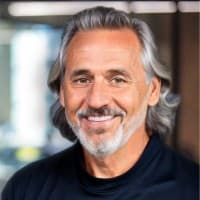
What truly defines a great leader? In this episode, we sit down with Steve Foster to uncover his incredible journey from a challenging childhood to a career spanning law enforcement, entrepreneurship, and civic service. Steve shares how grit, empathy, and curiosity have shaped his leadership philosophy and discusses why vulnerability is a strength every leader should embrace. Tune in for a conversation full of wisdom, heartfelt stories, and advice for building authentic connections that last a lifetime.
In this episode, we discuss the following:
1. The three pillars of great leadership: grit, empathy, and curiosity.
2. Why building long-term relationships matters more than transactional networking.
3. How vulnerability and authenticity can transform your leadership style.
CONNECT WITH STEVE:
https://www.linkedin.com/in/stevenfoster13/
CONNECT WITH SUSIE:
https://www.linkedin.com/in/susietomenchok/
CONNECT WITH JAMES:
https://www.linkedin.com/in/capps/
[00:00:03] Welcome to the Quick Take Podcast, the show where you get targeted advice and coaching for executives by executives. I'm Susie Tomenchok.
[00:00:12] And I'm James Capps. Give us 15 minutes and we'll give you three secrets to address the complex topic of issues that are challenging executives like you today.
[00:00:24] Hey, and welcome to Quick Take. I'm one of your hosts, Susie, along with James. How are you, James?
[00:00:28] I'm super excited to be here today.
[00:00:30] Why is that? Can you introduce our guest?
[00:00:31] Oh, we have an amazing guest. So many of our listeners will know. We have Steve Foster with us today, who is a longtime friend and an incredible leader. He has been involved with so many amazing things. And I think, Steve, your experience, what I find most interesting is it doesn't, it has spanned so many different areas of both the startup community, the general community, your work with small companies, large companies, your work, your civic work. I think it's all been really amazing. And I'm so excited to have you here today.
[00:01:01] Thanks.
[00:01:01] Hey, what we want to talk about today, though, is we really want to jump in and talk about your experience with leaders and leadership. I think that over time, we've had the luxury of working together and knowing that you work with so many good people, but you have a choice. And to do that, you know, you pick and identify the opportunities you want to be part of.
[00:01:21] And I was wondering if we could talk about, you know, what do you look for in leadership or, you know, what has really helped you become a great leader? Give us a little bit of, you know, how you think and maybe some of the background there.
[00:01:32] I think the background comes mostly from, you know, my upbringing. I grew up kind of in a rough situation as a kid. You know, my parents were not married and there was a lot of conflict, a lot of stuff and which resulted in me being homeless at about the age of 16.
[00:02:17] Interesting.
[00:04:19] Maybe some of it was wisdom. Maybe some of it was just vulnerable words that they wanted to have someone in a trusted environment to talk to. And so, and that just perpetuates and continues. And I look for that.
[00:04:33] I really look for that in the people, you know, the capacity for someone to be able to be truly authentic and vulnerable and say, I don't know, but we're going to figure it out. Really, I get very attracted to that.
[00:04:47] Interesting.
[00:04:48] I love your story and thanks for sharing that, like that connection and that curiosity for people and understanding where you're going. The question I want to know is what kind of advice is you look at, you talked a lot about mentorship for you and you like that connection.
[00:05:02] And giving back to the people that you see that are up and coming. When you look at leadership, what are the components that you think you tell those mentees that are so important that they embrace?
[00:05:15] There's three words that really stand out to me when it comes to leadership and it's grit, empathy and curiosity. You mentioned curiosity. And you can't achieve success without some level of grit.
[00:05:26] And you can call it toughness. You can call it stubbornness. You can call it anything you want to call it. I call it grit. And so what I try to impress upon people is not so much what I think they should do.
[00:05:39] You know, there's ways I can help them and mold them and, you know, and maybe say, you know, did you think about it this way or have you thought about it that way?
[00:05:47] But really what I, what I really tried to do is have them seek out relationships, right? And connection. Because that's where you build bonds of trust. That's where you gain knowledge and information. We can't know everything.
[00:06:03] And so when we seek out connection in a very authentic and vulnerable way, it's amazing how much comes your way, right? It's amazing the opportunities that you get. And so I really try to get people to be open more so to the fact that the more you, and it's cliche as hell, but it's, it really resonates with me. The more you learn, the more you realize what you don't.
[00:06:27] And the more people I meet, the more perspective I gain and the more confidence I have in, in my ability to be able to continue to connect. And I think that that's at the root of it. That's what really drives me is meeting interesting people and, and doing interesting things and having interesting conversations that lead to, you know, successes and battles and sadness and happiness, all that life can offer.
[00:06:57] You know, one thing that I find really interesting is this notion that you bring up of grit and vulnerability. And I have found that that, that is a difficult pairing for many leaders to both have the tenacity, have the, the, the focus, the goal, the drive, but also be vulnerable. Do you, do you see that that is more unique than, than it should be?
[00:07:22] Unfortunately, I think I do. I think I see that vulnerability. I mean, authenticity, I think is becoming more prevalent, but I think vulnerability is not quite there yet. Right. And, and people are, are always afraid.
[00:07:36] Maybe Susie and I chatted a little bit about, you know, politics, right. An office perspective. And people are always afraid to be vulnerable that they don't know something or they can't achieve something, you know, and it's, you know, and I've always said, I, I don't know, but I'll figure it out because I have a huge network that I can go ask questions of.
[00:07:54] I mean, you know, I'll ask you things, James. And so for, for me, it goes back to my grandfather and my grandfather was mocked. Right. I mean, it's, it's, it's not a secret that the DBJ did a whole article on me about 15, 20 years ago.
[00:08:07] Wow. And when my grandfather died, he was, I stood what, you know, what they call standing online and shaking hands. I was a kid, you know, I was probably 21 years old, 22 years old when he died.
[00:08:19] And I was online for over four hours. People just wanted to walk by and shake my hand and tell me how great my grandfather was. Everybody knew him. And it, and, and where it started off for me was I said, you know, if I can make a whole lot of people successful in my career, then I'll have a great audience cheering for me when I get my success.
[00:08:40] Oh, I love that. And, and so that's what it started off as. And what it became was this gigantic sea of friends, you know, friendship.
[00:08:49] Sure.
[00:08:49] Well, that I could call up and, and ask questions and they call me and ask me questions and, and we could be there for each other and, and not have an expectation and not feel like, well, why are you asking me? You know, you're, you're the head of a billion dollar company. You should be able to know how to do this.
[00:09:07] Well, that's just dumb. I mean, we all don't know everything we need to know, but we know a lot of people who do, you know, and I always tell my, I always tell my teams, you know, we may not know the answer, but the answer is in this room and to each other. We will, we will find a way. That's where it's rooted for me.
[00:09:26] Sure. Sure. Do you think that that ability to be both tenacious and vulnerable is, is something that's genetic? I mean, it sounds like your grandfather created a network of people that truly cared. And I can see some similarities in the way that, that you, that you attract people by giving.
[00:09:43] I think there's a Beatles line that says the more love you get is based on how much love you give. And is that, is that really rooted in this, this same topic?
[00:09:52] I think it is. I mean, I think, I think that love is a big deal. I mean, you know, when I struggle, I'm just like everybody else. My father never told me he loved me. My father never told me he was proud of me. My father's nickname for me was dunce.
[00:10:03] Right. So God, I mean, that just makes you want to hug people and, you know, do good things. But, but the way I looked at it was, you know, is about love and you can't be ashamed, but, but it is about experience too, because you have to go through certain experiences to begin to trust yourself and to trust others and to gain courage.
[00:10:24] I think when you have experiences that help build trust and courage, you can be more vulnerable.
[00:10:32] Right.
[00:10:32] And you can, and you can attract more people by understanding that, that it is at the end of the day, it is about love. I mean, I think you, you may have seen on my LinkedIn. I, I made a conscious decision several years ago to not like anything, to love everything.
[00:10:48] And, you know, and now I'm, I'm the three purple heart guys, you know? So people were like, well, why three purple hearts? Well, because I'm sick and tired of the anger and the frustration between red and blue from a political perspective. Purple was where everybody should be. I just want to respond with love. And so I try to do that with everybody. When I first meet you, you become my brother and you become my sister.
[00:11:13] And, and we're there for each other. And I give a lot of trust because, you know, at the end of the day, people gave me a lot of trust and they gave me the responsibility to do a thing.
[00:11:23] And I was able to do it because of their trust. And so I want to, I want to continue to perpetuate that.
[00:11:29] You talked about that connection and that love that you give to people and how important that is. And I think people get stuck on like networking and you need to connect like this concept of growing your network. And they feel like it's self-serving.
[00:11:45] It is.
[00:11:47] It is.
[00:11:47] It's like, it's a mindset shift. Like when you think about people that are building their network in the middle of it, that's the way you have to look at going into it. Do you, do you agree with that concept? Like how do you, how do you tell people how to make those connections that last a lifetime?
[00:12:04] You know, you have to, you have to, you have to go into making a relationship or building a relationship or connection without expectation. Right. And that means I can't expect you to do what I want you to do. And you can't expect me to do what you want me to do.
[00:12:16] And a lot of times these, these connections are based on need at the time and not a relationship over time. And so that, that, that troubles me. And so I always try to, I always try to draw people in who want to make a connection with me from a sales perspective and they want to sell me something.
[00:12:36] And so I try to help them build relationships thinking long-term playing the long game rather than, than transactional relationships. And so I work towards that. And the only way I can do that is to demonstrate that and, and, and to live that every day. And so that's, I think has been one of the key pillars of my success.
[00:12:58] Yeah. I have to just say, just to make that point, I love people to think about leadership as having impact on others that you may never understand. So you have to show up every day.
[00:13:12] You do.
[00:13:12] And that's what you just said is you have to show up every day and believe that you are having an impact because the day you don't show up in the right way, you can have.
[00:13:21] It's still going to have an impact.
[00:13:22] Yeah, exactly. Thank you.
[00:13:23] It's still going to have an impact.
[00:13:24] Yeah.
[00:13:25] It's still going to have an impact.
[00:13:25] Yeah. I have more than one story where I have run into a former employee or a former business partner or a former, you know, somebody who I worked for and has said, you know, there was this one time you did this thing that really resonated with me.
[00:13:37] And, and you kind of have to say, gosh, I remember that too and walk away. And, but knowing I have no recollection of that day. I don't remember that being important, but clearly it was something that stuck with them.
[00:13:49] And the fact that I showed up and was my genuine self at that moment, you know, made that, that moment important for, for that person. And I, that's, that's always a great feeling.
[00:13:58] Yeah.
[00:13:59] You know, I want to go ahead, Steve, jump in there.
[00:14:02] Well, I was going to say it's, it evolves over time.
[00:14:05] Oh yeah.
[00:14:06] And it's through learned experiences and those types of things.
[00:14:10] And, you know, I made a comment one time at a, with a, a gentleman that had 8,000 employees and he was the head of Avaya at the time.
[00:14:18] And, and I, and he said, well, how the heck did you go from being a vice narcotics guy to being a software CEO?
[00:14:25] And I'm like, it's easier. The decisions are easy. No one's shooting at me.
[00:14:29] Yeah. For one.
[00:14:30] Right. No one's, no one's poking me with a needle. No one's puking in the back of my car necessarily. And so these decisions are easier because at the end of the day, you are dealing with people's lives, but it's not life or death.
[00:14:43] Right.
[00:14:44] And so perspective was really important for me to bring into that.
[00:14:47] Let's talk a little bit about your, what some would question as a, or identify as an interesting jump from basically civil service, obviously in the, in the police ranks to software and then back to civil service.
[00:15:01] Can we talk about what you're doing now and how do those things compare and contrast?
[00:15:07] And, and what are the lessons you learned from those two arguably very different types of ecosystems when it, when it comes to leadership?
[00:15:14] Wow. Civil service is very different, you know, working, working in for a city government is very, working for a private company and very different than working for a public company.
[00:15:24] And I don't think of it that way necessarily.
[00:15:27] And so I left being a police officer because I didn't think I could be effective anymore, that I had to do something else.
[00:15:34] I had to do something else for me to continue my journey.
[00:15:37] Going back to law enforcement was something that's really important to me because of two things, you know, a, you know, crime in, in Colorado and specifically in Denver is, is bad.
[00:15:48] And I have companies and employees that experience it every day.
[00:15:51] My wife experiences it every day.
[00:15:53] You know, my wife is office, you know, she works at 17th and Broad, so she's right across the street from all.
[00:16:01] And my son's a police officer.
[00:16:03] And so he's, he's been a cop now.
[00:16:06] He's on the SWAT team for Arapahoe County.
[00:16:08] And he's been, he's been a police officer now for about nine years, 10 years.
[00:16:12] And so I want to show him the leadership that I could bring.
[00:16:16] I want it to be an example for him and all the young officers that, that I could go back.
[00:16:22] And I think I'm the first ever police officer, former police officer that was named as a police and fire commissioner on the civil service commission in the city of Calia, Denver.
[00:16:32] And, and it was interesting because when the city called me up and asked me what I wanted to do, if I wanted to join a commission or a board.
[00:16:40] And I said, anything to do with law enforcement.
[00:16:42] And they were like, well, that doesn't make any sense.
[00:16:44] You're a tech executive.
[00:16:45] And I said, well, but I used to be a cop and I was a police officer for 15 years and they didn't know.
[00:16:50] And I said, this is my opportunity to take all the leadership that I've worked on and all the things that I've done and bring it back to something that's really important.
[00:16:59] Not just to me, but to this community.
[00:17:02] And, and so it's been a lot of fun, but it's, it, it is understanding that you, you gotta, you gotta block out the noise because there's a lot of noise in, in working for the city.
[00:17:12] And you gotta stay focused on the outcomes and the goals that you're trying to drive.
[00:17:16] And you gotta bring good people to the table.
[00:17:18] Do you still find that there are the good leaders, even in the civic space that, that are trying to, you know, you can mentor or that you can learn from who are really putting some of those qualities out there that, that you really admire?
[00:17:33] Yes.
[00:17:33] Some of them are wore down.
[00:17:35] Some of them are frustrated.
[00:17:37] Some of them are ready to give up.
[00:17:38] And, and that's, that's a bad place for us as, as a community.
[00:17:42] And, you know, and I look for it from the standpoint of you can learn from anybody, right?
[00:17:47] I can, I, I've learned as much remote from receptionists as I've learned from CEOs.
[00:17:53] And so I think the thing that has really struck me is that people just want to know that you care.
[00:17:59] You know, I'm a big Maya Angelou person and her quote about how you make people feel was the first thing you saw in, in, you know, it was 14 feet high and 30 feet wide in my front, in my front boardroom.
[00:18:13] When you walked into the company, if you just treat people with respect and dignity and you, and you let them know that you care, it's amazing how a room lights out.
[00:18:22] But, you know, when I show up to the graduations and I, and everybody comes up and says hi to me because commissioners never come to the graduations before, you know, and I'm like, well, I'm going to see the fruits of my labor.
[00:18:33] I want to see people.
[00:18:34] I want to put a name to a face.
[00:18:36] Look, I want that kid to be hired.
[00:18:38] I want to go say hello and shake his hand or her hand and say, good job.
[00:18:42] And if you need help, call me.
[00:18:43] Right.
[00:18:44] And that just, and that just helps people re-energize.
[00:18:47] And I think we all need that no matter what walk of life.
[00:18:50] I mean, being a CIO is hard as hell.
[00:18:52] Being a CEO is lonely as hell.
[00:18:54] Right.
[00:18:55] But, but try being a brand new salesperson, trying to figure out how you're going to get from being a brand new salesperson, which I was when I first left law enforcement to being the CEO is a daunting task.
[00:19:06] You know, and if you have somebody who just says, you can do this, you know, just commit to it.
[00:19:11] You know, people want the easy button to leadership and they think that once you get the title, you know, I've made it there.
[00:19:18] But it's, it's really the nuances.
[00:19:20] It's taking the time.
[00:19:21] It's making the investments.
[00:19:22] It's leading with curiosity.
[00:19:24] It's, it's asking a question and then sitting and being silent.
[00:19:28] And I find so many times leaders believe that they're showing up the right way, but with a little bit of inspection around how they're showing up and challenge.
[00:19:40] I love that idea.
[00:19:41] When there's a surprise that you showed up, there's that some inspection of what's going on around.
[00:19:47] Yeah, it really is.
[00:19:48] And, and, you know, we're not, not always going to agree as human beings, right?
[00:19:53] We don't have to agree.
[00:19:55] We just have to have the conversations.
[00:19:57] Yeah.
[00:19:58] Right.
[00:19:58] And they have to come from the right place.
[00:20:00] I think if you, if you have people who are willing to have those conversations and they're, and they're authentic, then, then you're going to, you're going to do great things.
[00:20:09] For sure.
[00:20:10] So James, I'm going to challenge you.
[00:20:12] Yes.
[00:20:13] Are you going to find some nuggets that you're going to take away from this conversation?
[00:20:17] This is like, there's a lot.
[00:20:18] There's so many nuggets.
[00:20:20] I don't even know where to go.
[00:20:20] I know I have a vision of this little gold card coming out of a mine shaft with dozens of nuggets.
[00:20:26] But yeah, I think that, you know, it was just, I really loved Steve, your, your point of view on grid empathy and, and encourage just really three great markers for, for leadership.
[00:20:37] And I love that those are the things you look for in people that you choose to work with and partner with.
[00:20:43] And, you know, I took copious notes here, but, you know, I, I really think that additionally, you know, when you make those connections, I loved hearing that make those connections for a lifetime.
[00:20:53] It's not transactional.
[00:20:54] It's the longer journey.
[00:20:56] And, and, you know, ultimately something that I wrote down here that I, I had a hard time articulating, but I think you said it so well as so many of us leaders are involved in, in layoffs and difficult things.
[00:21:07] But the real part of it is that, you know, we're dealing with people's lives, but it's not life or death.
[00:21:12] And I do think the importance as a leader to realize, yes, it is not life and death, but it is people's lives.
[00:21:18] If we remember that we are more empathetic, we are more open and we are better leaders.
[00:21:22] And I think really highlight some of the traits that, that you find so appealing.
[00:21:27] So thank you so much for that, Steve.
[00:21:29] What, what a great conversation.
[00:21:30] I know we could go another four hours here, but I think we'll, we'll run out of minutes on our, our sell plan or something like that.
[00:21:36] If we keep going.
[00:21:39] Right.
[00:21:39] Well, it's been wonderful.
[00:21:41] Thank you so much.
[00:21:41] I appreciate, I appreciate the time today.
[00:21:43] And, you know, James is always, I appreciate our, our friendship.
[00:21:46] It's been years now.
[00:21:48] Absolutely.
[00:21:49] Which is wonderful.
[00:21:50] Lost track.
[00:21:51] Susie, now you're, you're stuck in my vortex.
[00:21:54] Oh my gosh.
[00:21:54] I'm excited.
[00:21:55] Cause what I've learned today is I'm not just a connection.
[00:21:59] I'm now part of your tribe.
[00:22:02] So thank you for that.
[00:22:03] You're part of the tribe.
[00:22:04] You're part of the crew.
[00:22:05] Fantastic.
[00:22:06] All right.
[00:22:06] Thank you everybody.
[00:22:07] Have a good day.
[00:22:10] Thanks for listening to this week's episode of quick take, where we talk about the questions that are on the minds of executives everywhere.
[00:22:16] Connect with us and share what's on your mind.
[00:22:19] You can find us on LinkedIn, YouTube, or whatever nerdy place on the internet.
[00:22:23] You find your podcasts.
[00:22:24] All the links you really need are in the show notes.